
 Deutsch (Deutschland)
  English (United Kingdom)
 Science Week in Action
Under the theme “Science for a Sustainable Future”, the third Science Week supported by Scientific Temper this year is taking place from 28 September to 2 October at Kasese Humanist School in Kasese, Uganda.
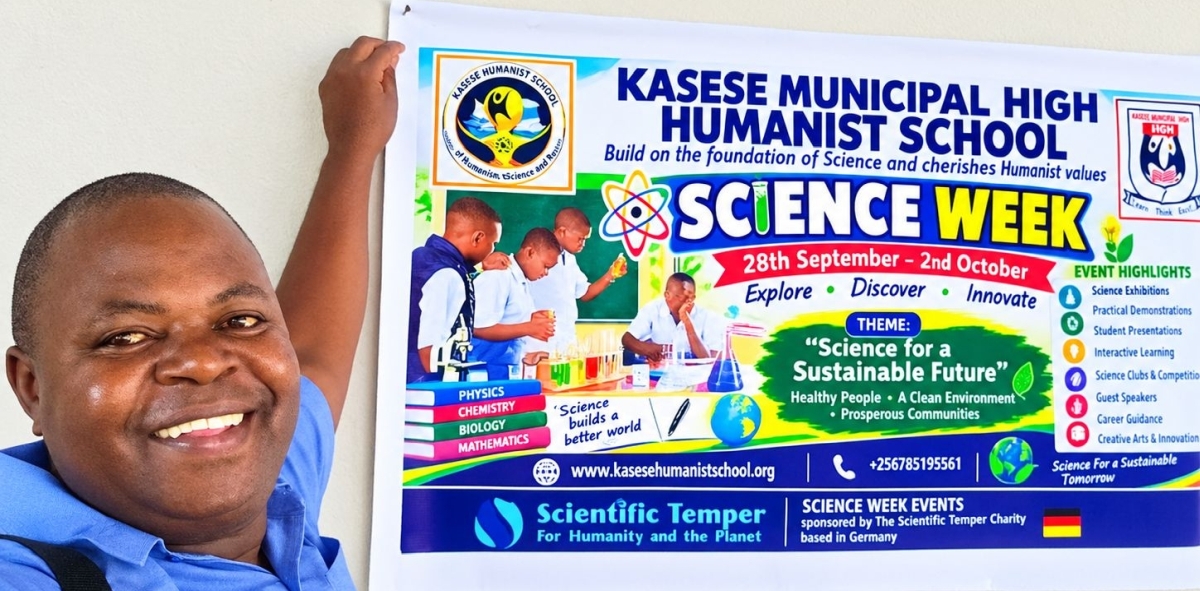
According to the school’s director, Robert Bwambale Musubaho, Science Week began with an introduction to its objectives and the fundamental principles of scientific work. The students explored scientific language and terminology and then learned how to plan and carry out a project. This included setting objectives, assessing strengths and weaknesses, addressing constraints and risks, and considering data collection, implementation and marketing.
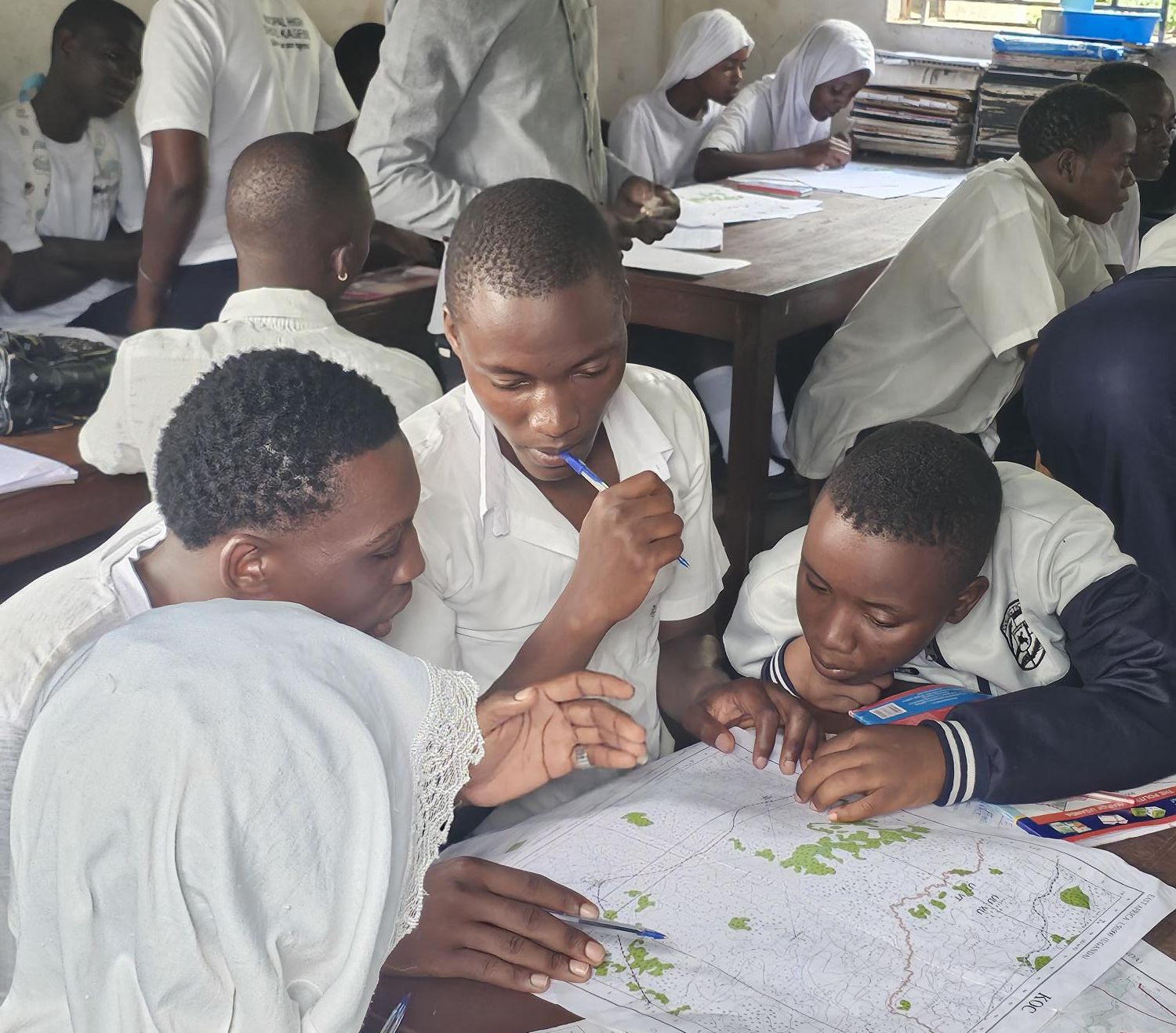
On the second day, the programme focused on map reading, determining grid references, and the use of GPS and its real-life applications. On the third day, the students first worked on a range of mathematical topics and concepts.
This was followed by several hands-on experiments. The students produced organic fertiliser and explored how it can improve soil fertility and crop yields while causing less harm to microorganisms in the soil. In another experiment, they investigated the effect of temperature changes on diffusion and its relevance to understanding the spread of pollution. They also conducted an experiment using a beam balance to demonstrate Hooke’s law of elasticity.
Practical chemistry activities and a range of experiments were planned for the following day. The week was to conclude with a tree-planting campaign around the school. The students were to plant more trees, learn about the tree nursery beds on the school grounds and explore proper soil care.
Throughout Science Week, all students and teachers receive a free breakfast. The participating teachers also receive an allowance.
The Director's Perspective
But what long-term goals does the school pursue through its regular Science Weeks? We asked the director, Robert Bwambale Musubaho. He replied:
At Kasese Municipal High Humanist School, we organise Science Weeks to inspire students to appreciate science, develop critical thinking, and understand how scientific knowledge can help address real-life challenges in their communities. We believe that education should go beyond classroom theory by giving students opportunities to conduct experiments, ask questions, explore ideas, and develop practical solutions based on evidence and reason.
Through Science Weeks, we aim to nurture curiosity, creativity, innovation and confidence among our students while encouraging them to pursue careers in science, technology, engineering and mathematics. Our hope is to raise a generation of young people who use science and humanist values to improve their communities, protect the environment, and contribute to a healthier, more sustainable and prosperous future.
Science Education with Global Relevance
At Scientific Temper, we are convinced that this educational project has significance far beyond the school’s immediate surroundings. It demonstrates how science education, hands-on learning and humanist values can be brought together. The young people who develop curiosity, critical thinking and initiative here can help shape not only the future of their communities and Uganda, but also contribute far beyond the country's borders.
After supporting the Science Weeks held in 2025, Scientific Temper has supported all three events this year. We have compiled reports on the previous Science Weeks here.
We look forward to continuing this successful partnership with the school in the coming year and reporting on it.